Every visible thing in your school is an expression of an invisible root system
A dear friend and colleague of mine recently sent me this article by Maria Popova on the power of rootedness:
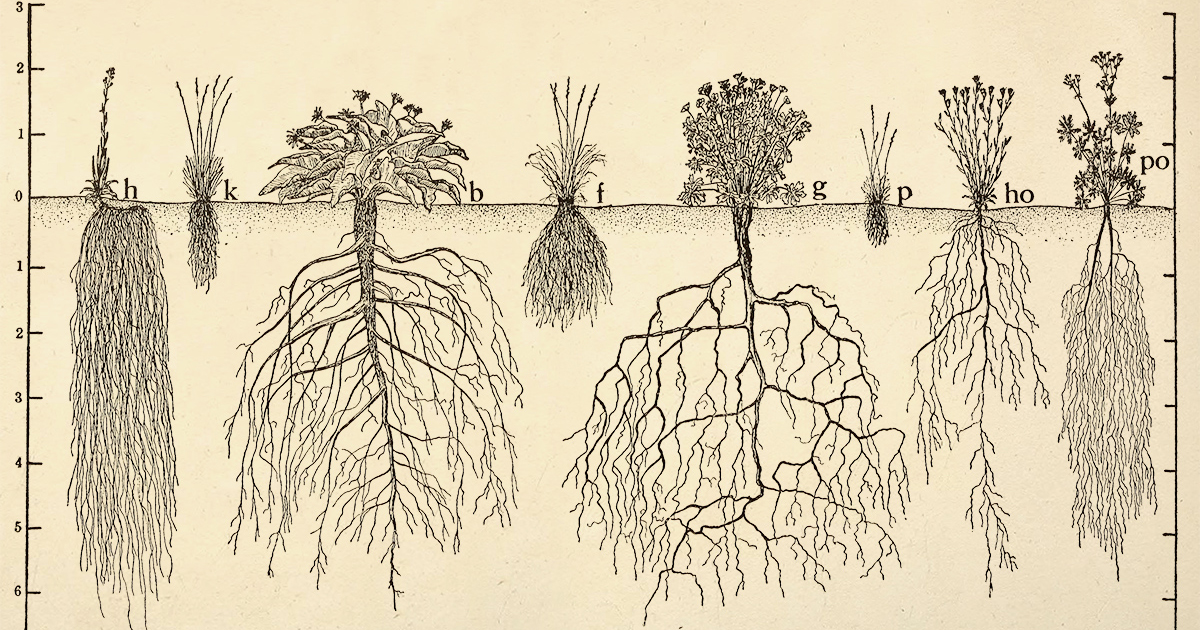
As so many of you know, I am fascinated by the ecology of organizations…which is why I always use the word ecosystem when talking about schooling
Margaret Wheatley, in her work on living systems theory, says that all organizations can and should be classified as living systems…not just as brick and mortar structures.
That concept of living ecosystems is why this article struck such a deep chord in me
Popova opens with this:
"Roots are so far out of sight for us, creatures of the upper world, that we don't readily think of them. But as soon as we do, as soon as we plunge the mind into the cold dark humus to which the body will one day return, they become a spell against despair and a consecration of all that is alive."
A spell against despair.
I read that line and immediately thought of every school leader I know who is white-knuckling their way through this season — exhausted, overstretched, wondering if the work is sustainable, wondering if it is working — and I thought:
This is exactly what we need to talk about.
Because I believe the crisis underneath so much of what ails our schools is not a crisis of strategy or structure or resources.
It is a crisis of roots.
The Invisible Architecture of Great Schools
Popova's essay is built around a century-old book by botanist and prairie ecologist John Weaver, who spent four years during the First World War studying 1,150 individual root systems across Nebraska, Washington, and the Rocky Mountains.
He excavated them by hand, drew them to exact measurements, and retraced them in India ink — creating stunning illustrations of the invisible architecture that holds the visible world upright.
The root systems of different species, Weaver wrote, while often "seemingly similar above ground," may be "of entirely different types" beneath it.

Here is what that means in the context of school leadership.
Two schools can look nearly identical from the outside.
Similar demographics. Similar schedules. Similar curriculum maps. Similar test scores, even.
And yet — one of them is alive in a way the other simply is not.
One of them produces graduates who go out into the world with purpose and fire and a deep sense of their own worth.
The other produces graduates who are credentialed but somehow…unformed.
They might be what we call “well-schooled” but not “well-educated”
One of them feels uptight, anxious, and fraught with worry and stress
While one feels hopeful, energetic, alive, engaging
The difference between these two schools—who may use the same textbooks, teach the same courses, and play football in the same district—is almost never what you can see.
The difference is the root system.
Here is what Weaver's root illustrations make undeniable:
The visible plant is entirely fed and sustained by an invisible counterpart in many ways far more essential than anything that grows above the surface.
Popova puts it this way: "The two are so tightly stemmed together that we are always interacting with both the visible person and their invisible root system."
This is one of the most important sentences I have read about what it actually means to lead a school.
When a person walks onto your campus, they see the visible school.
The buildings, the bulletin boards, the hallways, the faculty. They see the programs, the data, the initiatives. The documentation, the policies, the outcomes.
But what they are actually encountering — whether they know it or not — is the root system underneath all of it.
They are encountering the culture of trust, or distrust, that exists between leadership and faculty. The degree to which students feel genuinely known by the adults in the building. The health or dysfunction of the team. The clarity or confusion about the school's deepest purpose. The presence or absence of psychological safety. The question of whether the leader is leading from their deepest values, or from fear.
Every visible thing in your school is an expression of an invisible root system.
Deep administration is root work
I have often thought of schools (and probably any organization) as represented by a tree.
We often think the most important thing in our care as leaders would be the students, and, while they are of immense importance, they are not, I believe the thing we as school administrators should be tending for the students are the leaves (or fruit) of the tree
They are meant to leave, so, by default, we as leaders should keep our focus on what sustains not the leaves (students), nor the branches (faculty), nor the trunk (leadership team)…but instead, we should focus our most important efforts on the roots
For it is the roots that ultimately support and give life to the whole
If we focus on the leaves or the branches or the trunk and ignore the root system, eventually, everything else will run out of sap and die
This means that:
Deep administration is always root work
To lead from the roots is to understand that our work as school leaders is to tend our schools at the root level.
To ask not just "what is this student producing?" but "what is this student rooted in — and what does this soil need to offer them so they can grow?"
To ask not just "is this teacher effective?" but "is this teacher alive in this work — and what would it take to help them go deeper rather than just wider?"
It is the work of a leader to not just know the names of the students in their building, but knows the stories beneath the names.
To understand that the student who is failing math is not a data point to be intervened upon, but a human being with a root system — with fears, with wounds, with longings, with gifts that the gradebook has never once attempted to measure.
To recognize that the teacher who seems disengaged in a faculty meeting is not a performance problem to be managed, but a person whose roots may be starved of something they desperately need — belonging, purpose, the sense that their deepest gifts actually matter here.
Root work is slow work
It does not show up in the Q3 data. It cannot be rushed by a new initiative or accelerated by a more rigorous evaluation cycle.
Roots grow at their own pace, in the dark, in response to patient and consistent tending over time
It reminds me of when I grew up on a wheat farm
We planted wheat seeds in September that didn’t yield any discernible harvest until the following March
The same is true in the living ecosystem of any organization
Weaver spent four years excavating root systems, one plant at a time, by hand — because that was the only way to understand what was actually holding the visible world upright.
Four years. By hand. One plant at a time.
There is a lesson in that for every school leader who has ever grown frustrated that the culture is not changing fast enough, that the vision is not taking hold quickly enough, that the work of building something genuinely new and genuinely life-giving seems to move at an almost imperceptible pace.
The roots are growing. You just cannot see them yet.
And Popova's reminder cuts to the very heart of it: "We are always interacting with both the visible person and their invisible root system."
Always.
Whether we know it or not. Whether we intend to or not.
Every conversation in the hallway, every faculty meeting, every student discipline moment, every parent phone call — in every one of these, you are either tending the roots or depleting them.
Deepening trust or eroding it. Feeding the buried spirit or starving it.
The schools most alive, most energetic, radiating with kindness, purpose, and meaning, have leaders who have learned to tend root systems.
Leaders who have learned to ask the questions that go below the surface.
To create the conditions — the safety, the time, the culture of honest encounter — in which roots can actually be seen and tended.
They have understood, in their bones, that you cannot lead a flourishing school from the canopy.
You lead it from the roots.
The most important work in school leadership is underground work
It is the slow, patient, unglamorous labor of going deeper.
Of returning again and again to the questions that matter most.
Of building the kind of trust that allows real things to grow.
Of knowing your own roots clearly enough that you can lead from them even when the storms come.
This is not work that shows up in your school improvement plan. It is not measurable by your accrediting body. It does not make headlines.
But it is the work that makes everything else possible.
And it is, I believe, the work most of us were called to when we first said yes to education.
Blessings on the journey,
Scott
Inspired by Maria Popova's essay "Roots and the Meaning of Life" on The Marginalian (March 15, 2026), drawing on John Weaver's The Ecological Relations of Roots (1919) and Hannah Fries' poem "Epithalamion" from Little Terrarium (2017).

What if you could spend an entire year with a cohort of rooted school leaders leaning into community, collaboration, authenticity, purpose, and trust?
Real leadership doesn't happen in isolation
It happens in relationship
You became a school leader to make a difference—to create environments where students thrive, teachers grow, and communities flourish.
But the daily reality of leadership can feel overwhelming, isolating, and far from the vision that called you to this work.
What you don’t need is another strategy, seminar, or workshop
What you need is a rooted community of peers and expert guidance to help you lead with clarity, confidence, and joy
In April, we are going to do a deep dive on how to help school leaders avoid burnout and pursue flourishing
Come join us!
